
Last Updated: October 26, 2026
Quick Summary
The cost of a circuit breaker replacement in panel work depends on the breaker type and amperage, the labor involved, and the condition of the panel itself. Standard single-pole breakers are the least expensive to swap, while double-pole, GFCI, AFCI, and specialty breakers cost more because the parts cost more.
- Labor is where most of the cost variability lives, driven by access and panel condition.
- A breaker that trips repeatedly, feels hot, smells burnt, or won't reset should be inspected.
- Replacing one breaker is a targeted repair, while panel work is closer to a system fix.
- A panel upgrade makes sense when the panel is full, aged, damaged, or can't support new loads.
- Ask for a written scope before work starts so you know if you're paying for one part or panel-level work.
Table of Contents
- What Drives the Cost to Replace a Circuit Breaker in Panel
- Signs of a Bad Circuit Breaker You Should Not Ignore
- When a Circuit Breaker Keeps Tripping
- Electrical Panel Repair Cost vs. Replacing a Single Breaker
- Electrical Panel Upgrade Cost and When It Makes More Sense
- Repair or Replace: Choosing the Right Option for Your Home
- Get a Transparent Assessment From a Local Electrician
- Frequently Asked Questions
What Drives the Cost to Replace a Circuit Breaker in Panel
The cost of a circuit breaker replacement in panel work depends on three things: the breaker type and amperage, the labor involved, and the condition of the panel itself. No single flat number fits every home, which is why any quote you get should walk through each of these factors before naming a figure.
At Fine Designs Electrical, we've spent more than 35 years providing electrical solutions, and the honest answer is that two jobs that look identical from the hallway can land in very different places once the cover comes off.
Here's what actually moves the number.
Breaker Type and Amperage
Standard single-pole breakers are the simplest and least expensive to swap. Double-pole breakers, GFCI and AFCI breakers, and older specialty breakers cost more because the parts cost more. Amperage matters too: a 15-amp or 20-amp branch breaker is a different animal from a 50-amp or 60-amp circuit feeding a range or an EV charger.
Labor, Access, and Panel Condition
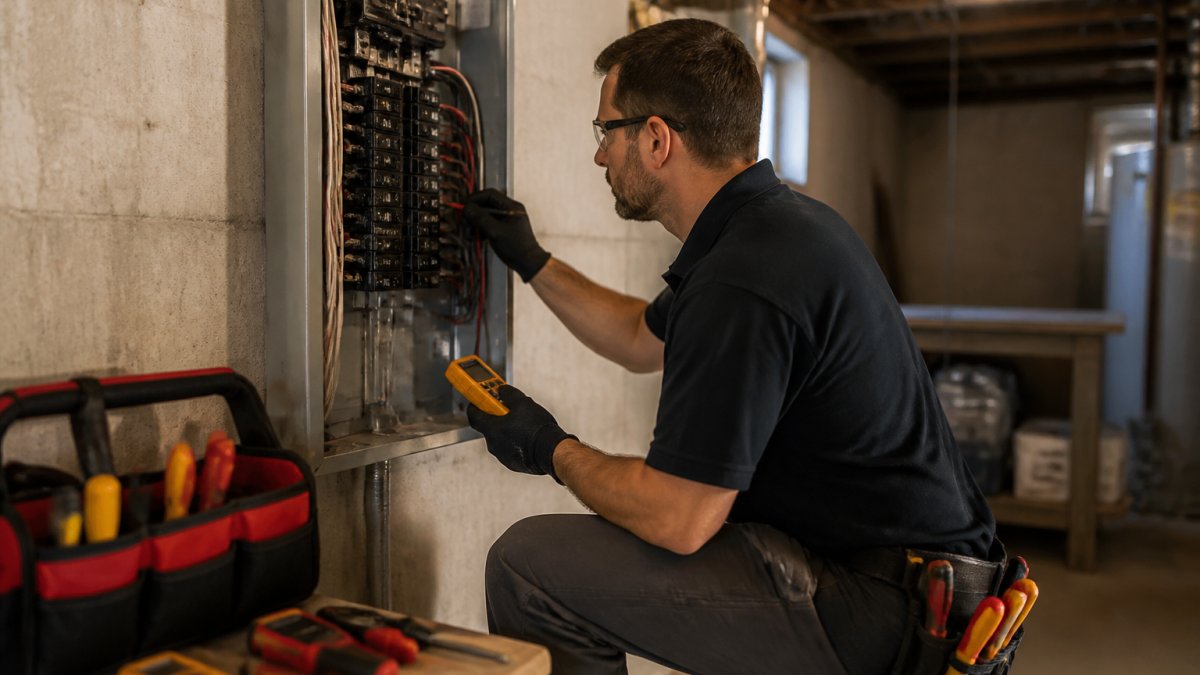
Labor is where most of the variability lives. A panel in a finished garage with clear access and labeled circuits is a quick job. A panel buried behind shelving, fed by aluminum wiring, or packed with double-tapped breakers takes longer, and that time shows up on the invoice. Corrosion, heat damage, or a panel that's been full for years all add inspection time before anyone touches a screwdriver.
Signs of a Bad Circuit Breaker You Should Not Ignore
A bad circuit breaker shows itself in a few reliable ways: it trips repeatedly under normal load, it feels hot or smells like burning plastic, it won't reset, or it buzzes when you stand near the panel. Any of those means you should stop resetting it and get it looked at.
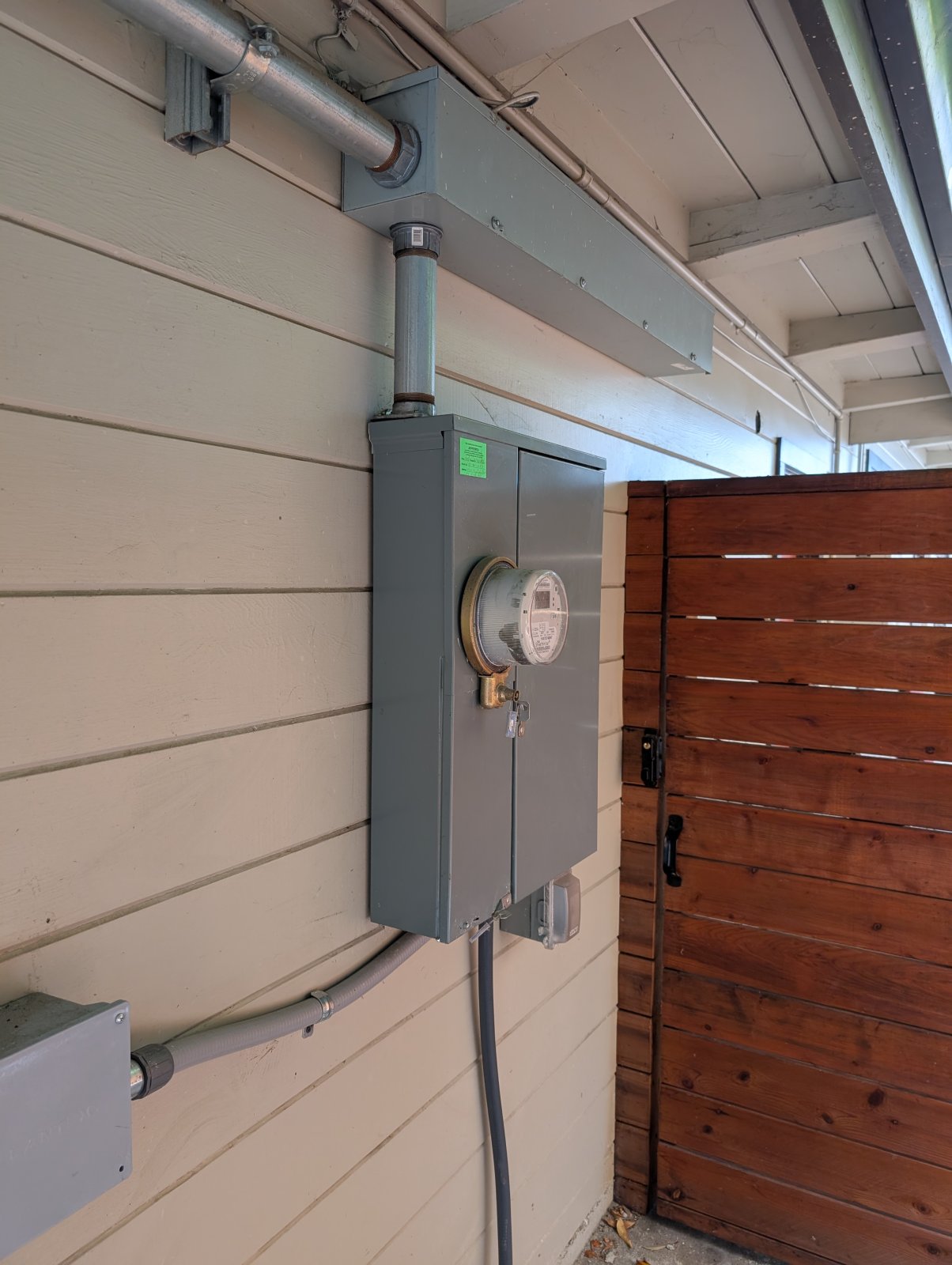
A breaker that trips is doing its job. If it keeps tripping, the circuit is telling you something is wrong, and forcing it back on is how panels get scorched.
Other signals worth taking seriously:
- A breaker that is warm to the touch when the circuit is lightly loaded
- Discoloration or a burnt smell around the breaker slot
- Flickering lights on one circuit only
- A breaker that trips the moment you plug something in
When a Circuit Breaker Keeps Tripping
A circuit breaker keeps tripping when the load on that circuit exceeds its rating, when there's a short or ground fault, or when the breaker itself has failed. The fix depends on which of those three it is, and guessing is how people waste money.
Start by unplugging everything on the circuit and resetting the breaker. If it holds with nothing plugged in, the problem is likely an overload or a faulty appliance. If it trips with nothing connected, the wiring or the breaker is the suspect, and that's a job for a licensed electrician.
The thing nobody tells you about tripping breakers is that overloads are often a sign the panel is undersized for how the house is actually used today. A home built decades ago with a modest panel and a modern kitchen, EV charger, and home office is asking a lot of a system designed for less.
Electrical Panel Repair Cost vs. Replacing a Single Breaker
Electrical panel repair cost and single-breaker replacement are two different budgets. Replacing one breaker is a targeted job: one part, one slot, a focused labor window. Panel repair, by contrast, can mean replacing a bus bar, addressing corrosion, or correcting previous work, and that scope is broader.
The single most useful thing to understand is that a breaker replacement is a repair, while panel work is closer to a system fix. If your electrician opens the panel and finds heat damage on the bus or a cluster of failing breakers, replacing one breaker is throwing money at a symptom.
Call and schedule your appointment today →
Ask for a written scope before work starts. A clear scope tells you whether you're paying for one part or for panel-level work, and it's the difference between a fair invoice and a surprise.
Electrical Panel Upgrade Cost and When It Makes More Sense
Electrical panel upgrade cost is a bigger number than a breaker swap, and it makes sense when the panel itself is the problem rather than one component. Signs you're at that point: the panel is full with no room for new circuits, it's an older fuse box or a known problem panel, it's been recalled or is known to be unreliable, or you're adding a major load like a Level 2 EV charger.
A panel upgrade is also the right call when breakers keep failing in the same panel. One bad breaker is bad luck. Three in two years is a panel telling you it's tired.
If your home or business is running out of capacity or still has an outdated panel, we'll assess your needs and install a modern system that keeps up with today's electrical demands safely and reliably. You can review panel upgrades in Livermore and book the service.
| Situation | Likely Fix | Why |
|---|---|---|
| One breaker trips under heavy load | Replace that breaker | Isolated component failure |
| Breaker trips with nothing plugged in | Diagnose wiring first | Fault may be in the circuit, not the breaker |
| Panel is full, no open slots | Panel upgrade | No capacity for new circuits |
| Multiple breakers failing in same panel | Panel assessment | Panel-level wear, not one part |
| Adding a Level 2 EV charger | Load calculation first | May need service upgrade |
Repair or Replace: Choosing the Right Option for Your Home
Repair wins when the panel is sound, the failure is isolated, and the rest of the system checks out. Replace wins when the panel is aged, full, damaged, or can't support what you're adding. The deciding question is simple: is the breaker the problem, or is the panel the problem?
That's the whole point of a family-owned shop doing one-on-one work with the owner and client, building relationships one at a time: you get clear transparency, flat-rate pricing, and discounts where they apply.
For readers who want to understand the full picture before booking, the page covers free estimates and same-day response.
Get a Transparent Assessment From a Local Electrician
Transparent pricing starts with a real assessment, not a phone estimate.
If you're searching for a circuit breaker replacement near me in Livermore or the Tri-Valley, here's what you get with us: a licensed and insured electrician and flat-rate pricing. And if the assessment points to a bigger job, we can handle the service upgrade panel change in-house, along with Level 2 EV chargers.
Frequently Asked Questions
How much does it cost to replace a circuit breaker in a panel?
Your actual circuit breaker replacement cost depends on the breaker type, amperage, panel brand, and how easily the electrician can access the panel.
Can an electrician replace just one circuit breaker?
Yes. A single faulty breaker can often be swapped without touching the rest of the panel, provided the panel itself is in good condition and the replacement breaker matches the panel's listed and approved types. An electrician will shut off power, test the circuit, remove the old breaker, and install a compatible replacement. If the panel is outdated, damaged, or already overloaded, the electrician may recommend a larger repair instead.
How do I know if a circuit breaker needs to be replaced?
Common signs of a bad circuit breaker include a breaker that will not reset, frequent tripping on the same circuit, a burning smell near the panel, scorch marks or discoloration on the breaker, a breaker that feels hot to the touch, or lights that flicker when appliances cycle on. Any of these warrant a professional inspection, since some symptoms point to wiring or panel problems rather than the breaker itself.
Is it safe to replace a circuit breaker yourself?
Replacing a breaker involves working inside a live panel with mains voltage present even after the main switch is off in some configurations. Mistakes can cause shock, arc flash, or fire, and unpermitted work can create problems when you sell the home or file an insurance claim. For most homeowners, hiring a licensed and insured electrician is the safer and often faster route, especially when the panel is older or the cause of the failure is unclear.
Should I replace a faulty breaker or upgrade the electrical panel?
Replace the breaker alone when the panel is modern, properly sized, and the failure is isolated. Consider an electrical panel upgrade when the panel is an older 100-amp unit, has a known problematic brand, shows rust or heat damage, or cannot support new loads like an EV charger or heat pump. Published panel replacement figures range from about $518 to $4,500 depending on scope, so comparing that against repeated single-breaker repairs helps clarify which path saves money over time.
A tripping breaker is a small problem with a short window to fix it before it becomes a panel problem. Fine Designs Electrical is family owned and operated, licensed and insured, with same-day response across Livermore and the Tri-Valley. We work one-on-one with the owner, quote flat rates, and offer discounts where they apply. Get started with Fine Designs Electrical and get a straight answer on your panel today.