Table of Contents
- Why Do My Lights Keep Flickering? Start With the Scope
- 7 Common Causes of Flickering Lights, Ranked From Simple to Serious
- How to Fix Flickering Lights: A Safe Step-by-Step Diagnostic
- Before You Start: The Two Rules
- Step 1: Map the Scope (2 minutes)
- Step 2: Isolate the Bulb (3 minutes)
- Step 3: Rule Out the Dimmer (3 minutes)
- Step 4: Test the Circuit Without Opening Anything (3 minutes)
- Step 5: Check for Load-Related Flicker (2 minutes)
- Step 6: Whole-Home or Multi-Room Flicker (2 minutes)
- The Decision Table
- Why Your Lights Flicker Differently: LED vs. Fluorescent vs. Incandescent
- Lights Flickering When Appliances Turn On? Here's What That Means
- Flickering Lights Fire Hazard: Danger Signs and What to Do
- When to Call an Electrician for Flickering Lights
- Frequently Asked Questions
Last Updated: October 4, 2026
Why Do My Lights Keep Flickering? Start With the Scope
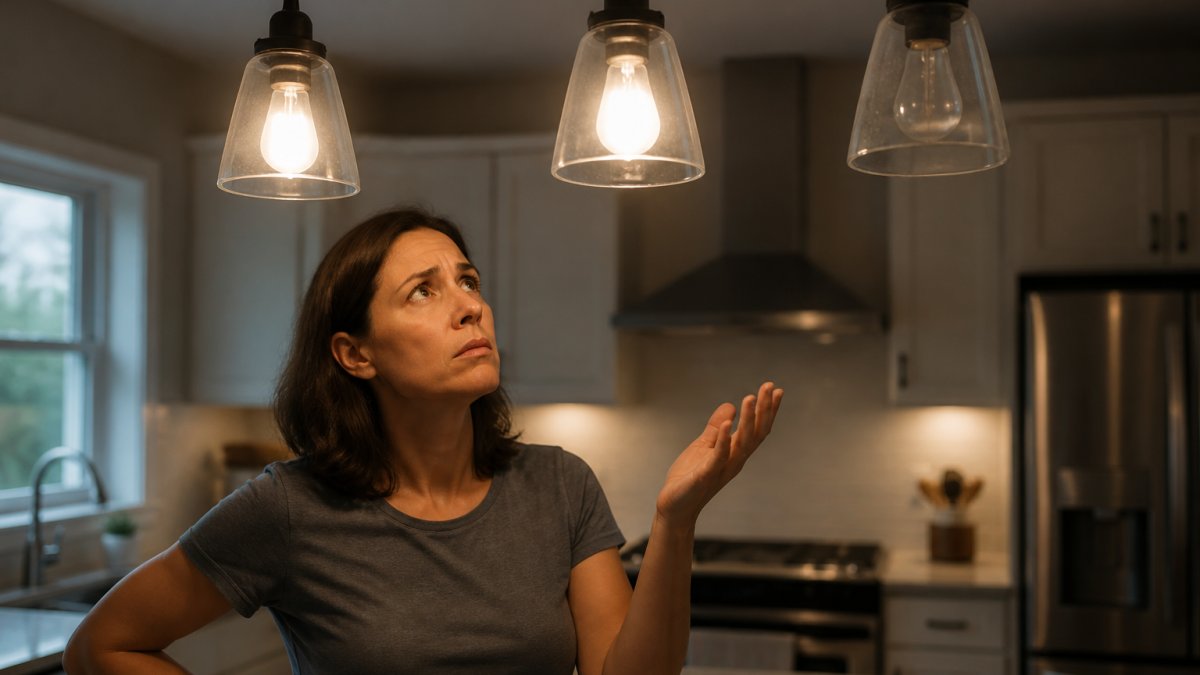
Why do my lights keep flickering? In most homes, the answer starts with one question: how many lights are affected?
At Fine Designs Electrical & Construction, we've spent more than 35 years tracing flicker complaints through Tri-Valley homes. The U.S. Fire Administration electrical fire data shows that electrical faults remain a leading cause of home fires, so scope matters for safety too.
Below, we'll show you how to narrow down the cause in minutes, and when to stop and call a pro.
One Fixture vs. a Whole Room vs. the Whole House
Scope is your first diagnostic clue, and it's free to check.
- One fixture flickers: the problem usually lives in that fixture. Think loose bulb, bad socket, or a dimmer that doesn't match the bulb.
- One room flickers: suspect the circuit serving that room. Loose wiring or an overloaded circuit are common.
- The whole house flickers: this points to the electrical panel, the service connection, or the utility supply.
Intermittent Flicker vs. Constant Flicker
Timing narrows things further.
- Intermittent flicker: the light blinks at random or only when something else runs. That points to a loose connection or voltage drop.
- Constant flicker: the light never settles. That's usually a bulb, dimmer, or driver problem.
A flicker that only appears when the AC kicks on tells a very different story than one that never stops.
7 Common Causes of Flickering Lights, Ranked From Simple to Serious
Here are the seven causes we see most often, ordered from easy checks to jobs that need a licensed electrician.

Causes You Can Check Yourself
- Loose or improperly seated bulb. This is the number one cause of a single flickering light. Turn off the switch, let the bulb cool, and reseat it firmly.
- Incompatible LED bulb and dimmer switch. Many LEDs need a dimmer rated for LED loads. A standard dimmer can make a dimmable bulb flicker, buzz, or strobe.
- Overloaded circuit. Too many high-power appliances on one circuit cause voltage drop. The lights dim or blink when the load spikes.
Causes That Need a Licensed Electrician
- Loose wiring or electrical connections. A loose connection at a switch, outlet, or fixture creates heat and flicker. This is a real fire risk.
- Voltage fluctuations from the utility. Problems upstream, at the transformer or service connection, affect the whole house.
- A failing circuit breaker or electrical panel. A weak breaker or corroded bus bar can cause random flickering across multiple circuits.
- A damaged service connection or weatherhead. The overhead lines and meter base are utility-side or utility-adjacent. Only a licensed electrician should touch these.
How to Fix Flickering Lights: A Safe Step-by-Step Diagnostic
Most guides hand you a checklist. What you need is a decision tree, a sequence where each observation tells you whether to keep going or stop. This flow takes about 15 minutes, needs no tools beyond a known-good bulb, and never asks you to open a panel, remove a fixture, or touch a wire.
Before You Start: The Two Rules
- Never open the electrical panel, a switch box, or a fixture housing to investigate a flicker. An arcing connection can shock you the moment you disturb it.
- Never assume a circuit is dead because the switch is off. With a shared neutral or multi-wire branch circuit, the box can still be live.
Step 1: Map the Scope (2 minutes)
Walk the home with the lights on and note which fixtures flicker.
- One fixture only → go to Step 2.
- Several fixtures in one room → go to Step 4.
- Fixtures in multiple rooms, or the whole home → go to Step 6.
Step 2: Isolate the Bulb (3 minutes)
Turn the switch off and let the bulb cool, incandescent and halogen bulbs stay hot for several minutes. Reseat it firmly, then turn the switch back on.
- Flicker stops → the bulb was loose. Done.
- Flicker continues → swap in a known-good bulb of the same type.
- Known-good bulb still flickers → the problem is the fixture, the dimmer, or the circuit. Go to Step 3.
Step 3: Rule Out the Dimmer (3 minutes)
If the fixture is on a dimmer, set it to full brightness for a few minutes.
- Flicker only happens at low or mid dimming → almost always a dimmer/bulb compatibility problem, not a wiring fault.
- Flicker happens at full brightness too → the dimmer or the fixture wiring is suspect. Stop here and call an electrician.
Step 4: Test the Circuit Without Opening Anything (3 minutes)
With the flickering fixture on, plug a small lamp or phone charger into each outlet on the same circuit, one at a time, and watch the fixture.
- Flicker changes when you plug something in or wiggle the plug → a loose connection at that outlet. Stop. Do not use that outlet.
- Flicker is steady regardless → go to Step 5.
Identify which outlets share a circuit by turning off one breaker at a time and noting what goes dark, breaker handle only, never with the panel cover removed.
Step 5: Check for Load-Related Flicker (2 minutes)
Turn on the largest appliances one at a time, air conditioner, dryer, microwave, space heater, and watch the flickering fixture.
- Flicker only when a big appliance starts → voltage drop. Note which appliance and go to Step 6.
- Flicker is constant, appliance or not → the issue is in the fixture or its circuit. Call an electrician.
Step 6: Whole-Home or Multi-Room Flicker (2 minutes)
If multiple rooms flicker, or the whole home dims and brightens, stop troubleshooting. This points to the panel, service conductors, or utility supply, all outside the safe scope of homeowner work.
Instead, gather the evidence your electrician or utility will need:
- Which rooms and circuits are affected
- Whether the flicker is constant, random, or tied to an appliance
- Whether it started after a storm, an outage, or nearby construction
The Decision Table
| What You Observe | What It Means | Next Move |
|---|---|---|
| One bulb flickers, reseating fixes it | Loose bulb | Done |
| One bulb flickers, known-good bulb also flickers | Fixture or dimmer | Call electrician |
| Flicker only at low dim settings | Dimmer/bulb mismatch | Replace dimmer with LED-rated unit |
| Flicker changes when you wiggle a plug | Loose outlet connection | Stop using outlet, call electrician |
| Flicker only when a large appliance starts | Voltage drop | Call electrician to measure |
| Multiple rooms or whole home flicker | Panel, service, or utility | Call electrician; document for utility |
If you reach the end of this flow without a fix, you've done the most valuable thing: narrowed the problem to a circuit, panel, or supply issue.
Why Your Lights Flicker Differently: LED vs. Fluorescent vs. Incandescent
Each bulb type fails in its own way, and the flicker looks different every time.
LED flicker is often a rapid strobe or buzz, usually from a dimmer mismatch or failing driver.
Incandescent flicker is a gentle dimming or brightening. Because they draw more power, incandescents react visibly to voltage drop from appliances.
That difference matters: an LED flickering on a dimmer is a compatibility problem, while an incandescent dimming when the fridge starts is a voltage problem.
Lights Flickering When Appliances Turn On? Here's What That Means
Lights flickering when appliances turn on is a classic sign of voltage drop.
High-power appliances like air conditioners, dryers, and space heaters pull a large current at startup.
A small dim on startup can be normal. It becomes a concern when:
- The flicker is strong or lasts more than a second
- It happens on multiple circuits, not just one
- Lights turn off completely and come back on
Those signs point to an overloaded circuit, an undersized wire, or a loose connection at the panel. A licensed electrician can measure the voltage drop and confirm the cause.
Flickering Lights Fire Hazard: Danger Signs and What to Do
Flickering lights are usually a nuisance, not an emergency. But some flicker patterns are a genuine fire hazard, and knowing the difference could save your home.
Watch for these danger signs:
- A burning or fishy smell near a switch, outlet, or panel
- Warm or discolored switch plates and outlets
- Buzzing, crackling, or popping sounds with the flicker
If you notice any of these, treat it as an emergency:
- Turn off the affected circuit at the breaker if it's safe to reach.
- Do not use that circuit again.
- Leave the area if you smell burning.
- Call a licensed electrician or 911 right away.
When to Call an Electrician for Flickering Lights
Call a licensed electrician when the flicker affects more than one fixture, returns after a bulb swap, or comes with any heat, smell, or sound. Those patterns point to wiring, panel, or supply problems outside the safe scope of homeowner work.
The Stop-and-Call List
Pick up the phone, do not keep testing, if any of these are true:
- The flicker spans multiple rooms or the whole home
- A known-good bulb still flickers in the same fixture
- You see or smell heat, burning, or scorch marks
If You Suspect the Problem Is Utility-Side
Some flicker originates upstream of your panel, at the service drop, meter base, or transformer serving your block. You can't fix those, but you can document them so the utility takes the report seriously.
What to record:
- Timing: the date, the time of day, and how long each episode lasts
- Pattern: constant, random, or tied to a specific appliance or time of day
- Scope: which rooms and which circuits flicker, and which do not
How to report it:
- Call your electric utility's customer service or outage line and describe the flicker as a possible service or supply issue, not a billing question.
- Provide the timing, pattern, and scope notes above.
- Ask for a reference or ticket number and write it down.
- If the utility sends a crew and finds nothing, ask your electrician to measure voltage at the panel while the flicker is happening, a logged voltage swing is evidence the utility can act on.
- If the flicker continues after a utility visit, escalate with the ticket number and your electrician's measurements.
Utilities generally own the service drop, the meter, and the transformer; homeowners own the panel and everything downstream. Knowing that boundary tells you who to call first.
What to Have Ready Before the Electrician Arrives
A little prep makes the visit faster and the diagnosis sharper.
- The scope: which lights flicker and which do not
- The timing: constant, random, or only when an appliance runs
- Your panel details: the amperage and any recent changes
What Affects the Cost of the Repair
No one can quote a flicker repair over the phone, because the cause determines the work. Pricing depends on quantity, dates, and delivery:
- A single-fixture fix (dimmer swap, socket replacement) is the smallest job.
- A circuit-level repair (loose connection at an outlet or junction box) takes longer because the electrician has to trace and open the circuit.
- A panel or service repair is the largest category and may involve permits and inspection.
Ask for a diagnostic fee and hourly rate up front, and whether the diagnostic fee is credited toward the repair.
Frequently Asked Questions
Should I be concerned if my lights flicker?
It depends on the pattern. A single bulb that flickers once after you flip the switch is usually a loose bulb or a dimmer mismatch, which is easy to fix. Flickering across multiple rooms, flickering that comes with a burning smell or buzzing, or lights that dim when the air conditioner starts point to wiring, panel, or utility problems. Those need a licensed electrician to inspect before the issue gets worse.
Do flickering lights always mean electrical problems?
No. The most common causes are simple: a bulb that is not fully seated in the socket, a dimmable LED paired with an incompatible dimmer switch, or a bulb reaching the end of its life. Check the bulb and the dimmer first. If a new bulb in a non-dimmable fixture still flickers, the problem is likely in the wiring, the circuit, or the utility supply.
Are flickering lights a fire hazard?
Sometimes. Flickering alone is not a fire hazard, but it can be a symptom of one. Loose wiring, loose electrical connections at outlets or breakers, and overloaded circuits generate heat, and heat is what starts electrical fires. Treat flickering as a fire hazard when it comes with a burning smell, scorch marks, warm outlet covers, buzzing, or repeated breaker trips. In those cases, turn off the circuit at the panel and call an electrician.
Why do my lights flicker when an appliance turns on?
High-power appliances like air conditioners, refrigerators, dryers, and space heaters draw a large current surge at startup. That surge causes a brief voltage drop on the circuit, which shows up as a quick dim or flicker. A small flicker on the same circuit is often normal. Flickering that spreads to other rooms, lasts several seconds, or happens every time the appliance runs points to an overloaded circuit or a weak service connection, and it is worth an inspection.