Table of Contents
- Understanding EV Charger Types and Compatibility
- Home EV Charger Electrical Requirements
- Does Your Home Need an EV Charger Panel Upgrade?
- EV Charger Installation Permit Requirements in Livermore
- Livermore EV Charging Permits and Inspections Process
- Professional Installation vs. DIY: What You Need to Know
- Installation Checklist and Common Challenges
- Frequently Asked Questions
Last Updated: October 9, 2026
Understanding EV Charger Types and Compatibility
Installing an EV charger requires understanding which type matches your vehicle and electrical setup. The three main charger levels, Level 1, Level 2, and DC fast charging, differ significantly in power delivery, installation complexity, and cost.
Level 1 chargers use a standard 120-volt household outlet. They're the slowest option, adding roughly 3-5 miles of range per hour. Most EVs come with a Level 1 cable, making this the entry point for new owners, though it's impractical for regular daily charging.
Level 2 chargers operate on 240-volt circuits, the same voltage as electric dryers or water heaters. They add 25-30 miles of range per hour and are the most common choice for home EV charger installation requirements. This is where most homeowners in Livermore focus their efforts.
DC fast chargers deliver 150-350 kilowatts and are primarily found at commercial locations. Home installation is rare because it requires three-phase power and substantial electrical infrastructure upgrades beyond typical residential capacity.
Compatibility depends on your vehicle's onboard charger. Most North American EVs use the SAE J1772 connector for Level 1 and Level 2 charging. Tesla vehicles use a proprietary connector but can adapt with an aftermarket adapter. Before planning any EV charger installation requirements work, verify your vehicle's charging port type and maximum charging speed from your owner's manual.
Home EV Charger Electrical Requirements
Your home's electrical panel must support the additional load. Most homes have either a 100-amp or 200-amp main service panel. A Level 2 EV charger typically requires a dedicated 40-60 amp circuit, depending on your vehicle's charging speed.
Start by calculating available capacity. Your panel's total amperage minus all existing circuits equals spare capacity. If you're running major appliances, electric heat, air conditioning, electric water heater, your available capacity shrinks quickly.
The National Electrical Code (NEC) requires that the circuit breaker protecting an EV charger be sized at 125% of the maximum current the charger will draw. If your charger draws 48 amps, the breaker must be 60 amps. The wire gauge must match: 48-amp circuits need 6-gauge copper wire or 8-gauge aluminum.
Distance from your panel to the charger location matters. Longer runs require thicker wire to prevent voltage drop. If your charger will be 100 feet from the panel, you'll need heavier gauge wire than a 30-foot installation. This adds material cost and labor time, which is why placement planning saves money.
Grounding and bonding are critical safety requirements. The circuit must include a properly sized equipment grounding conductor and, in some cases, a bonding jumper. Improper grounding creates electrocution and fire hazards that inspectors will catch during the permitting process.
Does Your Home Need an EV Charger Panel Upgrade?
Many homes do require a panel upgrade to safely support EV charger installation requirements. If your main service is 100 amps and you're already near capacity, upgrading to 200 amps becomes necessary.
Signs you need an upgrade include: flickering lights when major appliances run, breakers that trip frequently, or an electrician's assessment showing less than 60 amps available capacity. Modern homes with heat pumps, electric water heaters, and air conditioning consume significant power, leaving little room for an EV charger without an upgrade.
The upgrade process involves installing a new, larger main breaker and panel. This is one of the most expensive electrical projects a homeowner undertakes because it requires coordination with the utility company. The utility must disconnect service, which means temporary loss of power to your entire home. This is why professional installation is essential, the work requires licensed electricians and must pass inspection.
Older homes in Livermore built in the 1980s or earlier often have 100-amp service. Upgrading these panels to 200 amps is common when owners add modern conveniences like EV chargers. The good news: once upgraded, your home's electrical capacity supports future additions without additional upgrades.
If you're unsure whether your panel has spare capacity, a licensed electrician can assess your situation in 15-30 minutes. This assessment is the first step before committing to any EV charger installation requirements project.
EV Charger Installation Permit Requirements in Livermore
Livermore requires permits for all EV charger installations. This isn't optional, unpermitted electrical work creates liability, voids insurance, and triggers fines if discovered during a home sale or inspection.
The permit process begins with submitting plans to the city. Your plans must show the charger location, circuit specifications, wire gauge, breaker size, and the distance from the electrical panel. Most electricians handle this paperwork as part of their service.
Livermore's building department reviews applications for code compliance. They verify that your installation meets the National Electrical Code and local amendments. The review typically takes 5-10 business days, though it can extend if the city requests modifications.
Once approved, you receive a permit number and can begin installation. Keep this permit visible at the job site, inspectors may drop by unannounced to verify work-in-progress compliance.
The permit fee varies based on the project scope. A simple Level 2 charger on an existing 240-volt circuit costs less than a project requiring a panel upgrade. Contact Livermore's building department or your electrician for a specific fee estimate tied to your situation.
Livermore EV Charging Permits and Inspections Process
After installation, the city schedules a final inspection. The inspector verifies that wiring is properly sized, breakers are correctly rated, grounding is complete, and the charger is securely mounted and functioning.
Inspections typically happen within 5-10 business days of your request. The inspector arrives, reviews the work against the permit plans, and either approves the installation or notes deficiencies. Common issues include improper wire routing, undersized breakers, or missing grounding conductors.
If the inspector finds problems, you have time to correct them. Your electrician makes the necessary adjustments, and a re-inspection is scheduled. Most re-inspections pass on the first attempt if the initial work was done by a licensed professional.
Once the inspection passes, the city issues a certificate of occupancy or completion notice. This document is proof that your EV charger installation requirements work meets code. Keep it with your home records, you'll need it if you sell the property or file an insurance claim.
The entire permit-to-inspection timeline typically takes 2-3 weeks in Livermore, assuming no complications. Delays occur when inspectors find code violations or when the building department is backlogged. This is why scheduling early and using a licensed electrician reduces friction.
Professional Installation vs. DIY: What You Need to Know
Hiring a licensed electrician is the right choice for most homeowners. EV charger installation requirements involve high-voltage work, code compliance, and permitting that demand professional expertise.
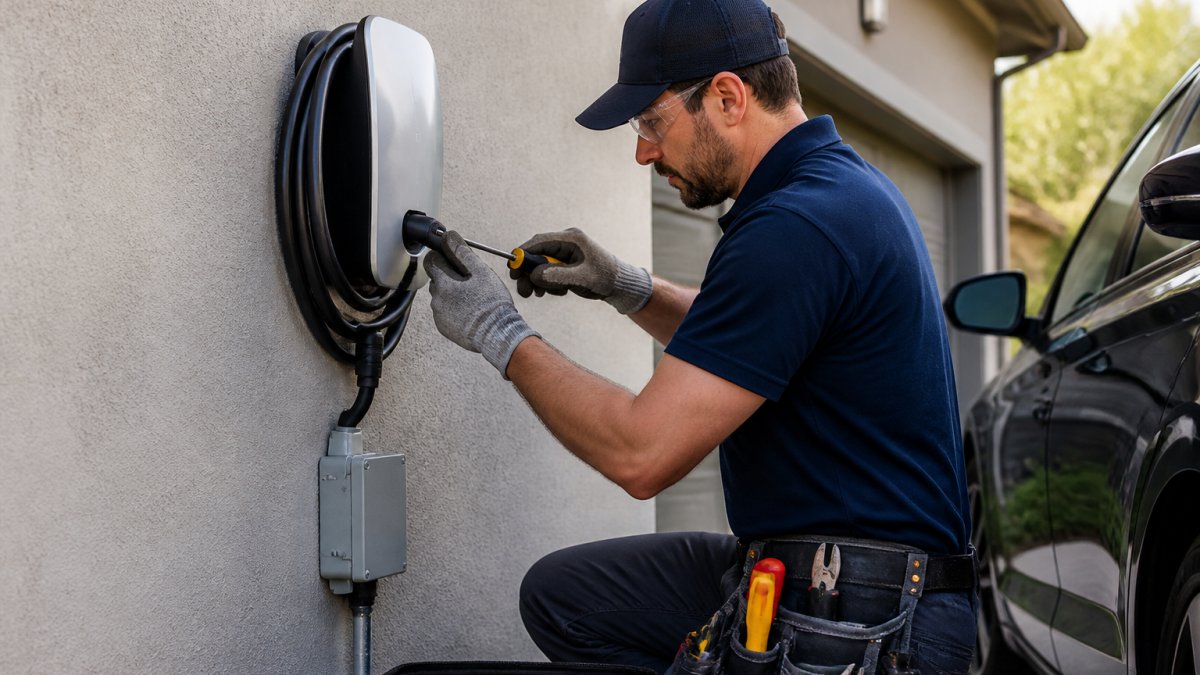
A licensed electrician brings several advantages. They understand local code amendments specific to Livermore, handle all permitting and inspections, carry insurance to cover mistakes, and guarantee their work. If something fails within a warranty period, they fix it at no additional cost. This protection matters when you're dealing with electrical systems that power your entire home.
DIY installation is technically possible for simple Level 1 setups, just plugging into an existing outlet, but anything beyond that requires permits and inspections.
The cost difference between DIY and professional installation is smaller than many assume. A licensed electrician's labor for a straightforward Level 2 installation might run several hundred dollars. If you make a mistake that requires rework, the cost balloons. If an inspection fails and you hire someone to fix it, you're paying twice.
Fine Designs Electrical & Construction handles all aspects of EV charger installation in the Livermore area. Our licensed and insured electricians manage permits, inspections, and code compliance so you don't have to.
Installation Checklist and Common Challenges
Before installation begins, confirm these items are in place: your vehicle's charging specifications documented, the charger location chosen, permits submitted and approved, and your electrical panel assessed.
Pre-Installation Checklist:
- Vehicle charging port type and maximum amperage verified
- Charger location selected (within 100 feet of panel preferred to minimize wire costs)
- Electrical panel capacity assessed by a licensed electrician
- Permits applied for and approved by Livermore building department
- Circuit breaker and wire specifications determined
- Conduit and mounting hardware sourced
- Inspection appointment scheduled with the city
Common challenges during installation include discovering that the panel is full and requires an upgrade (delaying the project by weeks), encountering buried utilities when trenching for conduit, or finding that the charger location requires longer wire runs than anticipated, increasing material costs.
Older homes sometimes have outdated grounding systems that don't meet current code. The electrician may need to add new grounding conductors or upgrade the grounding electrode system. This adds time and cost but is non-negotiable for safety.
Weather delays happen when installing outdoor chargers. Rain, wind, or extreme temperatures can pause work. Professional crews plan around forecasts and build buffer time into schedules.
The most common mistake is underestimating the importance of wire sizing. Homeowners sometimes try to save money by using smaller wire, thinking it will work. Undersized wire creates heat buildup, tripped breakers, and fire risk. Code-compliant wire sizing is not negotiable.
Installing an EV charger is a significant home upgrade that requires professional expertise. Fine Designs Electrical & Construction has spent over 35 years helping homeowners and businesses throughout the Tri-Valley area navigate electrical upgrades safely and code-compliantly.
Frequently Asked Questions
Do I need a permit to install an EV charger at home in Livermore?
Yes. All EV charger installations in Livermore require a permit from the city before work begins. This protects your home and ensures the installation meets electrical and safety codes. You'll need to submit an application with installation plans and specifications. Working with a licensed electrician who handles permitting simplifies the process and ensures compliance with local requirements.
What electrical requirements does a Level 2 EV charger need?
Level 2 chargers typically require a dedicated 240-volt circuit with 30-60 amps of capacity, depending on the charger's power rating. You'll need appropriately sized copper wiring (usually 6-8 gauge), a dedicated breaker in your electrical panel, and proper conduit protection for outdoor installations. The exact requirements depend on the charger's specifications and your home's wiring distance from the panel.
Does my electrical panel need an upgrade for an EV charger?
Not always. If your home has a 200-amp panel with sufficient available capacity, you may only need a new dedicated circuit. However, older 100-amp panels typically require an upgrade to safely accommodate an EV charger alongside existing electrical loads. A licensed electrician can assess your panel's capacity and determine whether an upgrade is necessary before installation.
What inspections are required after installing a home EV charger?
After installation, Livermore requires a final electrical inspection to verify the charger meets code standards, proper grounding, correct breaker sizing, and safe wiring connections. The inspector will verify the installation matches the permitted plans. Only after passing inspection can you legally use the charger. Your electrician coordinates the inspection scheduling with the city.
Can I install an EV charger myself, or do I need a licensed electrician?
California law requires a licensed electrician to perform EV charger installation work. This includes all wiring, breaker installation, and connections to your electrical panel. While you can purchase and own the charger hardware, the electrical work must be done by someone with proper licensing and insurance. This ensures safety, code compliance, and valid permit approval.
How do I apply for an EV charger installation permit in Livermore?
Contact Livermore's Building Division or visit their website to obtain permit application forms. You'll submit electrical plans showing the charger location, circuit specifications, panel details, and installation method. Many homeowners have their electrician prepare and submit these documents. The application fee varies based on project scope. Once approved, you receive a permit number before any work begins.