Last Updated: October 25, 2026
Quick Summary
An electrical panel outdated can create serious safety risks and struggles to handle modern electrical demands. Watch for flickering lights, frequent breaker trips, burning smells, rust, or a warm panel, especially if your system is over 30 years old and was designed for lower electrical loads than today's homes require.
- Most electrical panels are designed to last 25 to 40 years, with those installed before 1990 likely nearing end of life
- Flickering lights throughout your home usually indicate the panel cannot deliver steady current to circuits
- Older panels lack modern safety features like GFCI and AFCI protection that prevent electrical fires and electrocution
- A visual inspection should check for rust, corrosion, scorch marks, heat, and burning smells without opening the panel
- Professional assessment determines whether repair or full upgrade is needed to meet current electrical code standards
Table of Contents
- Common Electrical Panel Warning Signs
- How Old Is Too Old for an Electrical Panel
- Flickering Lights and Electrical Panel Problems
- Performing a Visual Electrical Panel Safety Inspection
- When Your Electrical Panel Is Outdated
- Safety Risks of Outdated Electrical Systems
- Getting Your Panel Assessed and Upgraded
- Frequently Asked Questions
Common Electrical Panel Warning Signs
An electrical panel outdated can create serious safety risks for your home or business. At Fine Designs Electrical, we've worked with hundreds of property owners in Livermore and the surrounding Tri-Valley area, and we've learned to spot the telltale signs that a panel needs attention.
The most obvious warning signs include flickering lights, outlets that don't work, and a panel that looks visibly old or worn. But there's more to it than just appearance. An outdated electrical panel often struggles to handle modern electrical demands. Your home today uses far more power than homes built decades ago, and an aging panel simply can't keep up.
Here's what to watch for:
- Frequent circuit breaker trips
- Burning smells near the panel
- Discolored or scorched outlets
- Rust or corrosion on the panel box
- A panel that's warm to the touch
- Flickering or dimming lights when appliances turn on
Watch out: If you notice a burning smell or the panel feels hot, stop using major appliances immediately and call a licensed electrician. This is a fire hazard. If you need immediate help, our 24-hour emergency electrician service is available around the clock.
Many homeowners ignore these signs until a real problem forces their hand. Don't wait. A visual inspection now can prevent costly damage or worse later.
How Old Is Too Old for an Electrical Panel
Most electrical panels are designed to last 25 to 40 years. If your home was built before 1990, there's a good chance your panel is nearing the end of its useful life.
Age alone doesn't always mean danger, but older panels often lack the capacity and safety features modern homes need. Panels installed in the 1970s and 1980s, for example, were built to handle much lower electrical loads than today's households demand.
The age of your panel matters because:
- Older panels use outdated safety technology
- They may not have ground fault circuit interrupter (GFCI) protection
- Breakers wear out over time and fail more often
- Corrosion and deterioration accelerate with age
If your panel is 30 years or older, it's worth getting a professional assessment. You don't necessarily need to replace it immediately, but you should know its condition and capacity. A licensed electrician can tell you whether upgrades or replacement makes sense for your situation.
According to guidance from the National Electrical Code, electrical systems should be inspected regularly to ensure they meet current safety standards. This is especially true for older homes where the original panel may no longer be adequate.
Flickering Lights and Electrical Panel Problems
Flickering lights are one of the most common signs that something's wrong with your electrical system. When lights flicker, it usually means power is dropping briefly, then returning. This happens when the panel can't deliver steady current to your circuits.
The cause is often an electrical panel outdated or failing. Here's why:
- Loose connections inside the panel deteriorate over time
- Breakers wear out and can't maintain proper contact
- The panel's capacity is exceeded by your home's electrical load
- Corroded wiring reduces power flow
Flickering can also indicate individual circuit problems, but when it happens throughout your home, the panel is usually the culprit. If you notice lights dimming when you turn on the air conditioning or run the oven, your panel is struggling to handle the load.
This isn't just an annoyance. Voltage fluctuations can damage appliances and electronics. More importantly, they signal that your electrical system is under stress. EXTERNAL_LINK: Outlet & Switch Repair in Livermore services can help diagnose whether the problem is a specific circuit or a broader panel issue.
Don't ignore flickering lights. Have a licensed electrician inspect your panel and wiring to identify the root cause.
Performing a Visual Electrical Panel Safety Inspection
You can do a basic visual inspection of your electrical panel yourself, but always follow safety rules. Never open the panel or touch any components inside. A licensed electrician should handle any detailed inspection or repairs.
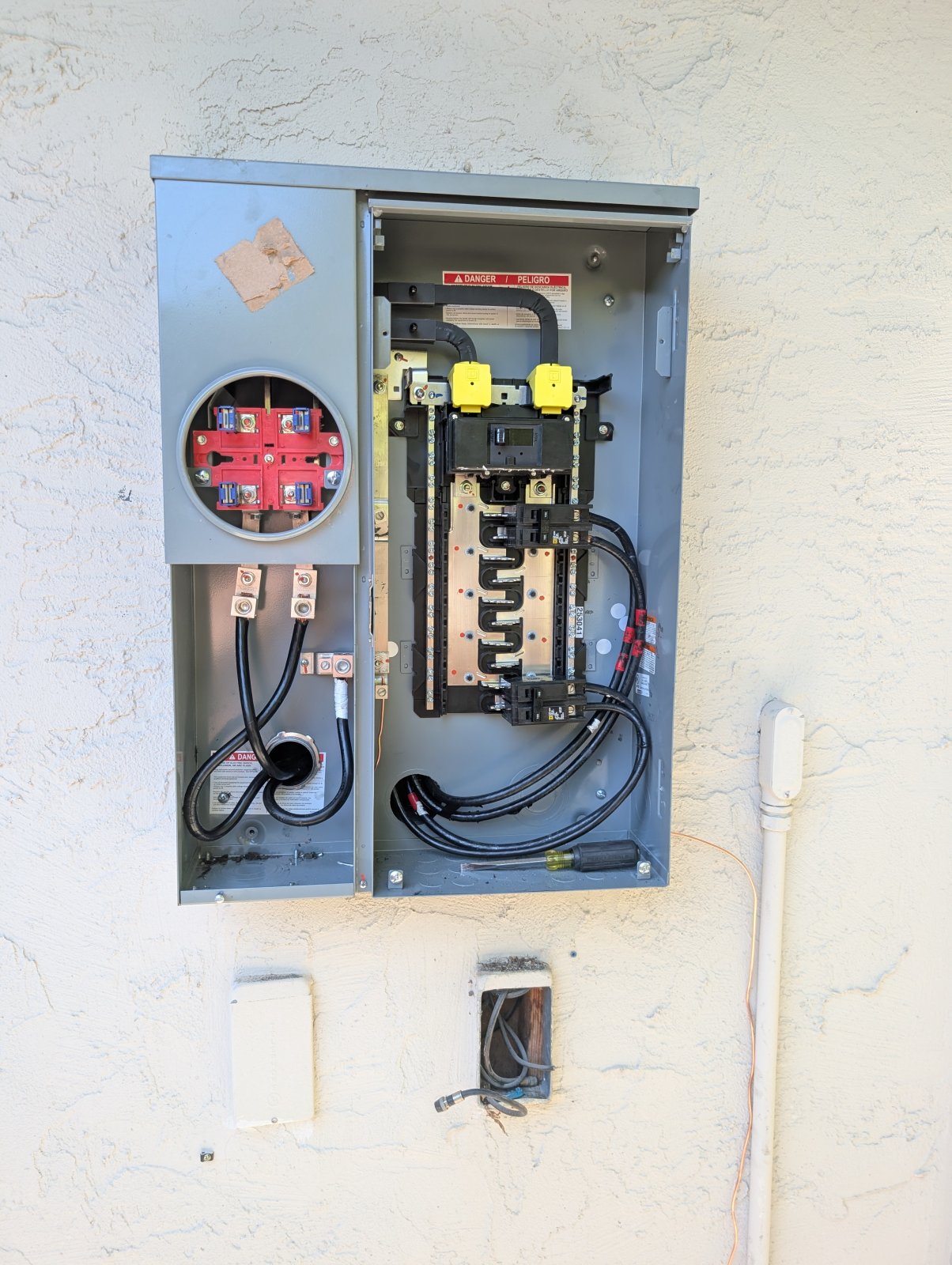
Here's what to look for from the outside:
- Panel location: Is it easily accessible or blocked by storage?
- Panel age: Check the manufacturer label for the installation date
- Visible damage: Look for rust, corrosion, water damage, or scorch marks
- Breaker condition: Can you see the breaker switches clearly? Are any tripped or loose?
- Labeling: Are circuits clearly labeled so you know what each one controls?
- Heat or smell: Does the panel feel warm or smell like burning plastic?
A well-maintained panel should be clean, dry, and cool to the touch. The breakers should sit flush in their slots, and there should be no signs of moisture or damage.
If you notice any red flags during your visual check, contact a licensed electrician. In Livermore, EXTERNAL_LINK: Electrical in Livermore professionals can perform a thorough inspection and recommend next steps.
When Your Electrical Panel Is Outdated
An outdated electrical panel becomes a problem when it can no longer safely handle your home's electrical needs. Modern homes use more power than ever before. Air conditioning, electric vehicles, water heaters, and home entertainment systems all draw significant current.
Older panels, especially those rated at 100 amps or less, often can't support these demands. When a panel is undersized, breakers trip frequently, and you may need to upgrade to a higher amperage panel.
Signs that your panel is truly outdated include:
Call and schedule your appointment today →
- Constant breaker trips even when you're not running many appliances
- Inability to add new circuits without professional help
- An inspector or electrician recommends an upgrade
- Your panel is a known problematic model (like Federal Pacific or Zinsco panels)
- You're planning major renovations or adding new systems like EV charging
An outdated panel also puts your home at risk. Older technology doesn't include modern safety features like arc fault circuit interrupters (AFCIs) that prevent electrical fires.
The good news: upgrading is straightforward. A licensed electrician can assess your current system, determine your actual electrical needs, and recommend the right panel size and type. Our Service upgrade panel change handles the entire process, including permits and inspections, with the personalized attention you deserve.
Safety Risks of Outdated Electrical Systems
An outdated electrical panel isn't just inconvenient, it's a genuine safety hazard. Older systems lack protections that modern codes require, and deteriorating components can fail suddenly.
The main risks include:
Electrical fire: Loose connections, worn breakers, and corroded wiring can overheat and ignite nearby materials.
Shock hazard: Older panels lack GFCI protection in bathrooms and kitchens. This protection cuts power instantly if moisture is detected, preventing electrocution.
Arcing: When electrical connections fail, they can arc and spark, creating fire risk.
Overheating: An undersized panel pushed beyond its capacity generates excessive heat, which degrades insulation and increases fire risk.
Equipment damage: Voltage fluctuations from a failing panel can destroy appliances and electronics.
According to the U.S. Consumer Product Safety Commission, electrical fires cause thousands of home fires each year. Many of these could be prevented with regular maintenance and timely upgrades.
The National Electrical Code exists for a reason: to keep people safe. If your panel doesn't meet current code standards, it's time to upgrade.
Getting Your Panel Assessed and Upgraded
The first step is getting a professional assessment. Learn about panel upgrades in Livermore and book your service directly. A licensed electrician will inspect your panel, test it, and tell you whether it's safe as-is or needs work.
During an assessment, the electrician will check:
- Panel age and condition
- Current amperage rating
- Actual electrical load your home is using
- Any signs of damage or deterioration
- Whether the panel meets current electrical code
Based on this inspection, you'll get clear recommendations. Sometimes a simple repair or circuit adjustment is enough. Often, a full panel upgrade is the best solution for safety and capacity.
A panel upgrade typically involves:
- Turning off the main breaker
- Removing the old panel
- Installing a new panel with higher amperage
- Transferring and relabeling circuits
- Testing all connections
- Pulling permits and passing inspection
This is licensed, permitted work. Never attempt it yourself. The process takes a few hours, and your power will be off during installation. A professional handles all permitting and inspection requirements.
At Fine Designs Electrical, we're a family-owned business with over 35 years of experience serving Livermore and the Tri-Valley area. We build relationships one client at a time, working directly with you to understand your needs and deliver honest recommendations. Our licensed, insured team brings clear communication, flat rate pricing, and available discounts to every job. We pull permits, manage inspections, and ensure your system meets code.
If you're unsure whether your panel is outdated, the best move is a free assessment. A licensed electrician can answer your questions, show you exactly what you're dealing with, and give you honest recommendations, no pressure, no surprises.
Don't let an outdated electrical panel put your home at risk. Get your system assessed by a licensed professional who knows the Livermore area and will build a relationship with you based on transparency and trust. Contact Fine Designs Electrical for a free evaluation and discover what your panel really needs.
| Warning Sign | What It Means | Next Step |
|---|---|---|
| Flickering lights | Power delivery is unstable | Have panel inspected |
| Frequent breaker trips | Panel is overloaded or failing | Get professional assessment |
| Burning smell | Electrical components overheating | Call electrician immediately |
| Panel age over 30 years | System may lack modern safety features | Schedule inspection |
| Rust or corrosion | Moisture damage or deterioration | Professional evaluation needed |
Frequently Asked Questions
How can I tell if my electrical panel is outdated?
Look for age (panels over 25-30 years old are often outdated), frequent breaker trips, flickering lights, a burning smell near the panel, rust or corrosion, and an inability to handle modern electrical demands like EV chargers or additional circuits. Many older panels use outdated technology that doesn't meet current electrical codes. A licensed electrician can assess your specific panel and confirm whether an upgrade is needed.
What are the warning signs of an unsafe electrical panel?
Warning signs include breakers that trip repeatedly, a warm or hot panel box, visible scorch marks or burn damage, a smell of burning plastic or rubber, flickering or dimming lights, and corrosion around connections. Older panel brands with known safety issues (such as certain Federal Pacific Electric or Zinsco panels) are also red flags. Any of these signs warrant a professional inspection immediately to prevent fire risk or electrical shock.
Do flickering lights mean I need a new electrical panel?
Flickering lights can indicate an outdated or failing electrical panel, but they may also result from loose connections, faulty breakers, or wiring issues elsewhere in your home. However, if flickering occurs throughout your house and other signs of panel age are present, a panel upgrade is often the solution. A professional inspection will determine whether the problem originates in your panel or elsewhere in your electrical system.
How much does it cost to upgrade an electrical panel?
Panel upgrade costs depend on your home's size, current panel amperage, local electrical codes, permitting requirements, and whether additional work (like rewiring or service line upgrades) is needed. Pricing varies widely, and Fine Designs Electrical offers flat-rate pricing with transparency and available discounts. Contact us for a free quote to understand the exact investment for your specific situation.